
Microplastics in drinking water
Microplastics out. Minerals in.
Yes, microplastics can be filtered out. They are rare in tap water and much more common in water from plastic bottles. With a MAUNAWAI filter, they come out and the minerals stay in.
The short answer
- Tap water
- Rare, according to measurements so far.
- Water from plastic bottles
- Much more common than in tap water.
- Filtering at home
- Yes, without electricity. Microplastics out, minerals in.
This surprises many people
Most microplastics do not come from the tap.
According to measurements so far, microplastics are rare in tap water. In water from plastic bottles, on the other hand, laboratories find particles much more often, and some of them come from the packaging itself.
Schematic illustration, without measured values. For context: WHO report on microplastics in drinking water, 2019.
Where microplastics come from and what research says about the risks: Guide: microplastics in water
Tap water is already a very good choice. With MAUNAWAI, it becomes water of spring water quality: pollutants such as microplastics come out, the minerals stay in.
For every home
How to filter out microplastics at home.
With every MAUNAWAI system, microplastics come out. What matters most is where you want to filter: on the table, straight from the tap or throughout the house.
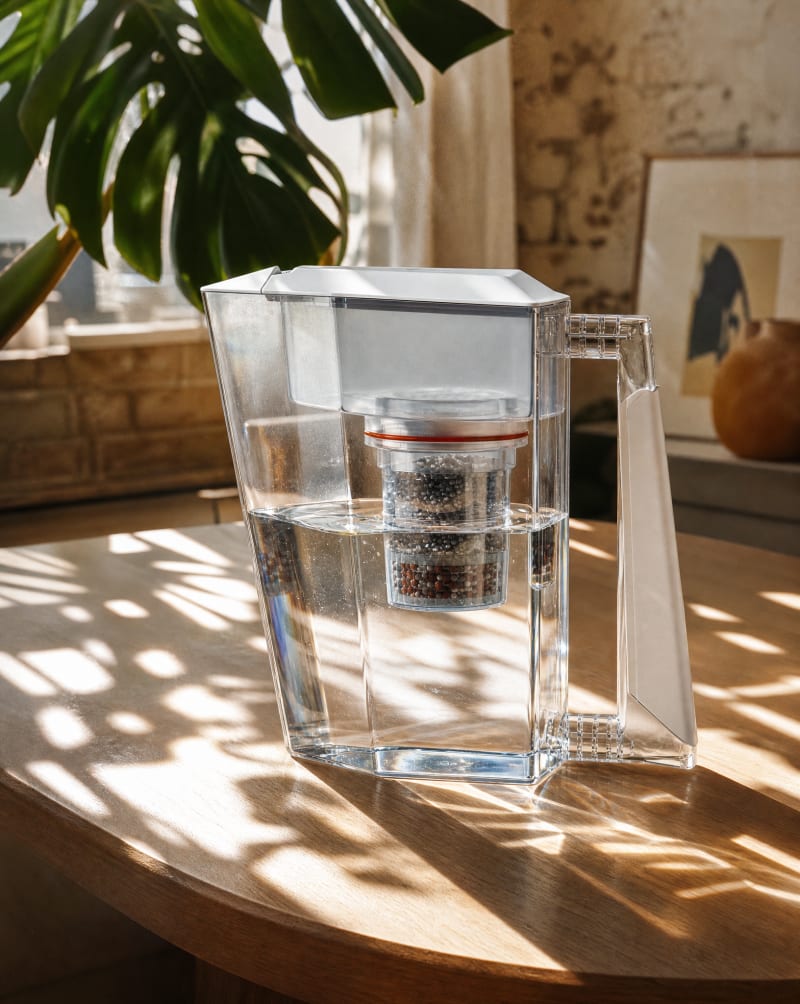 On the table
Kini
The water filter jug. The easiest way to start.
from €140.–
Discover
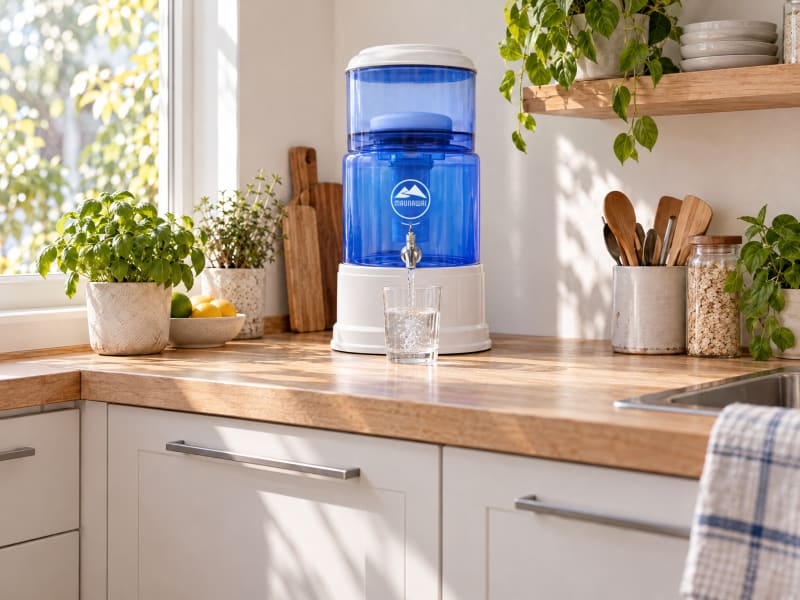 For the family
PiPrime
Plenty of water, without a connection and without electricity.
from €429.–
Discover
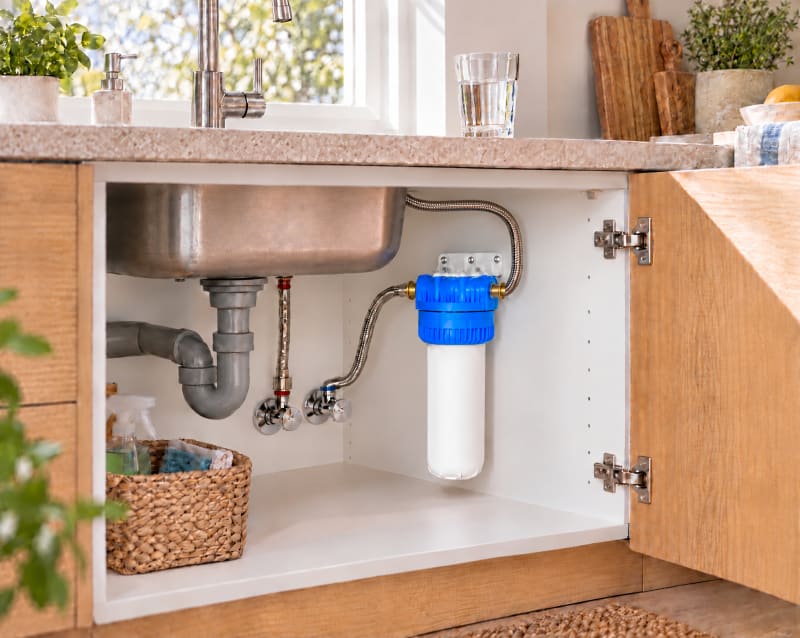 Straight from the tap
PiTec
Out of sight under the sink. Your tap stays as it is.
from €469.–
Discover
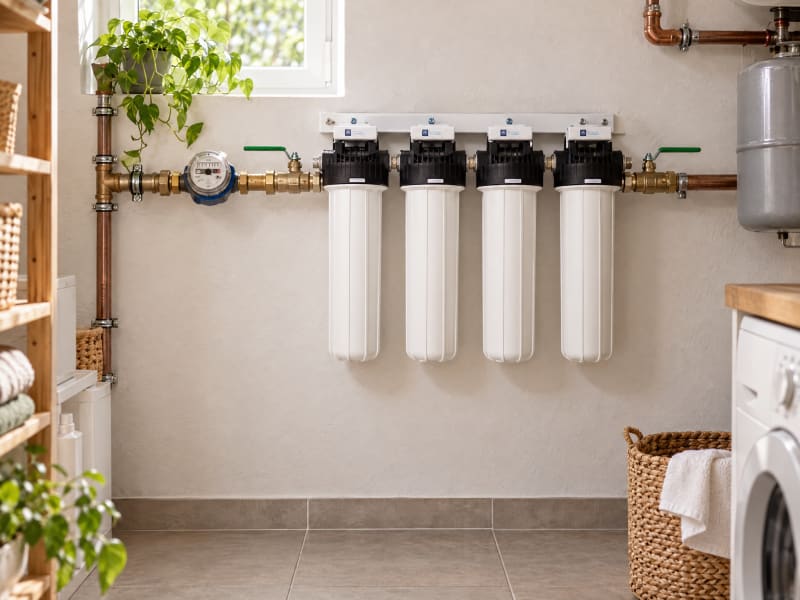 For the whole house
Peka
At the mains connection, for kitchen, bathroom and garden.
from €2,799.–
Discover
The biggest step
Leave bottles behind, without giving anything up.
-
No more crates. No lugging bottles home from the supermarket, no empties, less plastic waste.
-
Water that tastes good. Fresh and without a taste of chlorine. For coffee, tea and the whole family.
-
Always ready. The jug sits in the fridge or on the table. Fill it, wait a moment, pour.
We’ve had the MAUNAWAI water filter for 5 years now and can’t imagine our household without it. We love this fresh water quality.“

What makes us different
Not just filtered. Spring water quality.
Mauna means mountain, Wai means water. In nature, rain becomes spring water on its way through sand, gravel and rock. The Kini follows this path within just a few centimetres. That is why we talk about regenerating water rather than just filtering it.
-
Rain
falls on the mountain and begins its journey.
-
Sand and gravel out
take out what does not belong in the water. In the Kini: the filter stage. This is where the microplastics come out.
-
Rock in
gives the water minerals. In the Kini: 21 mineral ceramics.
-
The spring
Water as it should be. In your glass.
Less plastic in your glass, but what about the jug?
And the jug itself?
The Kini is made of medical-grade plastic (SMMA N30), is Made in Germany and releases nothing measurable into the water. This was tested by Fraunhofer IVV, an independent institute that tests food packaging.
- 1 Tougher than everyday use. A test liquid stood in the jug for 10 days at 40 °C. At home, cool water usually only stays in it for a few hours.
- 2 Then measured. How much passed from the plastic into the liquid?
- 3 The result: Nothing measurable passed from the body of the jug.
What migrates, compared with the maximum permitted value
Milligrams per square decimetre of plastic surface. Limit under EU Regulation 10/2011, tested to EN 1186, Fraunhofer IVV, test report PA/4882/16.
- Medical-grade plastic
- Made in Germany
- 10-year warranty on the container
Included as well
And what about PFAS?
People who pay attention to microplastics often ask about PFAS too, the so-called forever chemicals. We had the Kini tested for these as well, at the DAkkS-accredited laboratory PWU.
- 1 Tougher than everyday use. The laboratory deliberately spiked water with ten PFAS substances, around 8.6 micrograms per litre in total. That is far more than is usually found in tap water.
- 2 Filtered through the Kini. Each of the ten substances was then measured individually.
- 3 The result: None of the ten substances was detectable any more. That is over 99.9% less.
over 99.9%
less of the ten PFAS substances tested¹
¹ PWU, DAkkS-accredited laboratory, test report H2017-05556. Other PFAS, for example TFA, were not part of the test. Applies to the Kini and PiTec 2in1.
To be honest
What no laboratory measures.
How water tastes and whether it comes close to the water of a good spring is not in any test report. This is our experience of almost three decades, not a measured value. For us, good water is more than the sum of its measured values.

Spring water starter set
The Kini: spring water quality from your tap. Made at home, without bottles.
- Microplastics out, over 99.9% less PFAS¹, plus reduced chlorine, pesticides and heavy metals
- Limescale protection pad: some of the limescale is removed, the rest does not form deposits
- 21 mineral ceramics, cartridge with 170 g of activated carbon
- Jug made of medical-grade plastic, Made in Germany, 10-year warranty on the container, cartridges available for at least 15 years
- Change the cartridge every two to three months, in a few seconds; in the annual pack for €130.–
Included in the starter set: Kini, protective cover and two Tritan drinking bottles (1.0 and 0.5 litres), gifts worth €39.80. 30-day money-back guarantee.
¹ Over 99.9% less of the ten PFAS substances tested, measured at the DAkkS-accredited laboratory PWU (test report H2017-05556).
What to look for in a microplastics filter.
Five questions you can ask any supplier.
What else is removed besides microplastics?
Do not just ask about microplastics, but also about other substances and whether there are test results for them.
PFAS, hormone, pharmaceutical and pesticide residues, and much more.
What is the filter system made of, and has it been tested?
If you want to avoid microplastics, you should also look at the housing, jug and cartridge.
For example the Kini: medical-grade plastic, tested by Fraunhofer IVV.
What stays in the water?
Do not just ask what is removed, but also what stays in.
The minerals stay in.
How often do you change the cartridge?
And what does that cost per year?
Kini: every 3 months. PiTec under-sink: every 12 months.
Will cartridges still be available in a few years?
And spare parts?
MAUNAWAI guarantees the availability of spare parts for up to 15 years.
Frequently asked questions
Can microplastics be filtered out of water?
Yes. With the Kini, microplastics come out of the water and the minerals stay in.
Does tap water contain microplastics?
Hardly any. According to measurements so far, microplastics are rare in tap water. There is no limit value. In 2019, the World Health Organization concluded that, based on current and still limited knowledge, microplastics in drinking water do not appear to pose a health risk, and it calls for further research.
Is there more microplastic in bottled water?
Yes, measurably more, especially in single-use plastic bottles. Some of it comes from the packaging.
Does this also apply to the other MAUNAWAI systems?
Yes. With every MAUNAWAI system, microplastics come out, whether jug, PiPrime, PiTec 2in1 under the sink or Peka for the whole house.
Does the Kini also filter PFAS?
Yes. At the DAkkS-accredited laboratory, none of the ten PFAS substances tested was detectable any more after filtering, which is over 99.9% less. Other PFAS, for example TFA, were not part of the test.
Does the jug itself release plastic?
Fraunhofer IVV tested it: 10 days at 40 °C, and nothing measurable passed from the body of the jug. EU law would permit 10 milligrams per square decimetre.
Microplastics out. Spring water quality in your glass.
Start with the spring water starter set. If it is not right for you, you have a 30-day money-back guarantee.
Or call us: +49 3327-570-880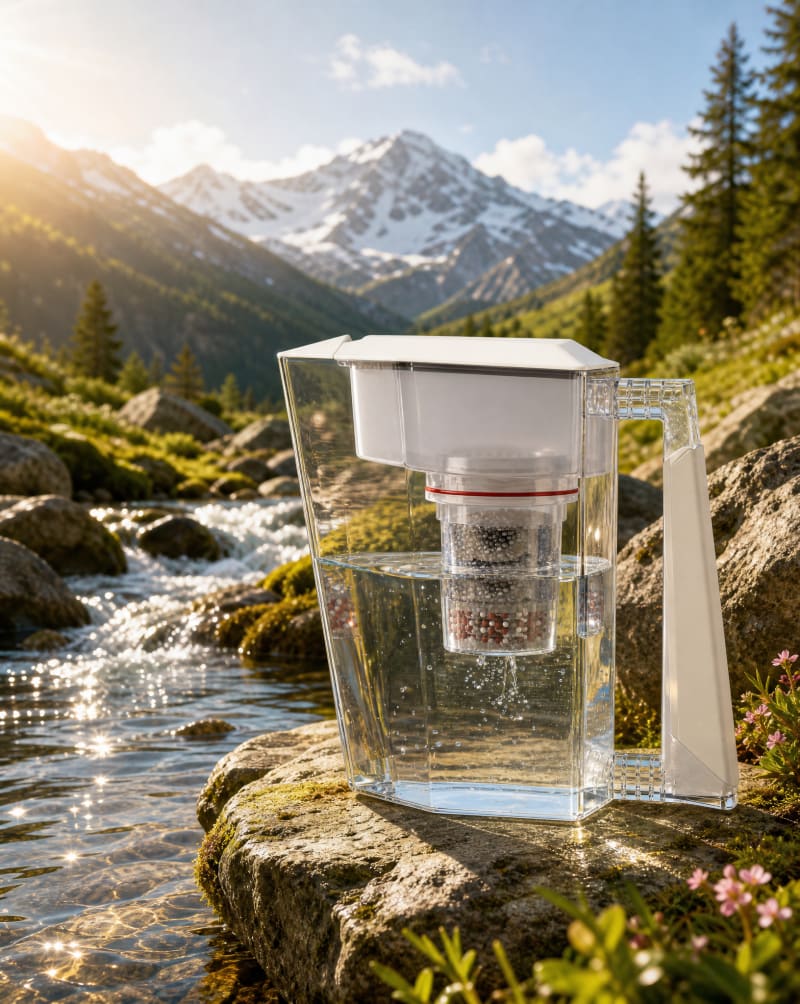
The line is currently busy
+49 3327-570-880Available again on Monday from 9 o'clock. Or you can arrange for us to call you back right here.
We’ll give you a call
A quick, no-obligation chat: our water experts will discuss with you whether the system is right for you.
Your data will be used solely for the purpose of processing your enquiry. Privacy Policy
Sources
- WHO (2019), Microplastics in drinking-water
- PWU, DAkkS-accredited laboratory: test report H2017-05556 (ten PFAS substances)
- Fraunhofer IVV: overall migration, Kini
As of: October 23, 2026 Publisher: MAUNAWAI