What becomes visible when water evaporates
Evaporation patterns reveal what chemical analyses cannot detect: the structural quality of water. MAUNAWAI water differs significantly from unfiltered tap water.
- The method was developed at the University of Stuttgart and reveals the ordered structure of water under a microscope.
- Tap water leaves dense, unstructured patterns with distinct salt rims. MAUNAWAI water displays ordered, crystal-like forms.
- Osmosis water and distilled water performed worse in this method than the MAUNAWAI filtrate, despite having lower levels of contaminants.
- The structural quality of MAUNAWAI water was comparable to that of natural spring water.
- This method complements chemical analysis: it reveals what limit values and measured values alone cannot show.
What dark-field microscope images reveal about your water
When you look at a glass of water, it always looks the same – clear, colourless, unremarkable. Yet behind this apparent uniformity lies a hidden world of structures and patterns of order that are invisible to the naked eye. Microscopic water analysis makes this world visible – and shows you what conventional analyses cannot detect.
The method: evaporation images
The evaporation image technique, developed by Ruth Kübler and further refined by Prof. Dr Bernd Kröplin at the University of Stuttgart, works according to a simple yet revealing principle: a small drop of water is placed on a glass slide and left to dry in the air under controlled conditions. In doing so, it leaves behind a kind of stamp – a unique pattern that provides insight into a wide variety of influences on the water’s structure.
Documentation is carried out using dark-field microscopy at a total magnification of 40 to 200 times. The glass slides are cleaned with absorbent but abrasion-resistant paper, sterile droplets three to four millimetres in diameter are applied, and the slides are left to air-dry under optimal room conditions. Each droplet image is unique, yet when repeated under the same conditions, a specific basic pattern emerges. From this pattern, experts can draw conclusions about the purity, mineral content, naturalness and vitality of the water – properties that cannot be detected using conventional chemical analysis.
How to read evaporation patterns
To understand evaporation patterns, one needs to be aware of certain empirical observations. Mineral-rich, particularly ‘hard’ waters, exhibit a very dense structure in the pattern.
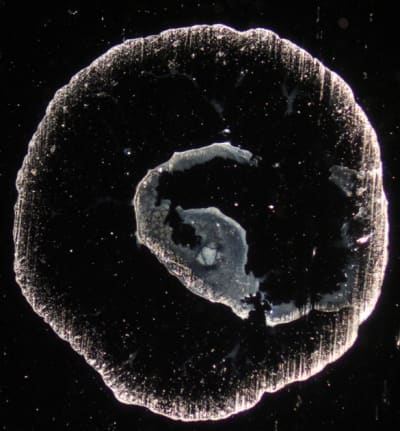
Thick white edges indicate a concentration of salts. In this case, the structure of the water itself is only faintly pronounced – typical of untreated tap water or water that has only passed through a simple household filter.
Loose or evenly scattered structures, on the other hand, indicate – given the same mineral content – that the water itself possesses a stronger structuring force. Regularly arranged ring formations and crystal-like shapes are signs of a high degree of order – experts refer to this as coherence.
What the images of MAUNAWAI water show
The investigations were carried out on tap water from various cities – including Stuttgart-Vaihingen, Budapest and Pécs in southern Hungary. In all cases, the water was compared before and after filtration through the MAUNAWAI system.
The results were consistent and impressive:
Whilst the evaporation images of the unfiltered tap water showed dense, unstructured patterns with pronounced salt rims, the MAUNAWAI-filtered water presented a completely different picture. Berthold Heusel, Head of Research at the Institute of Statics and Dynamics at the University of Stuttgart, described the structure as “uniformly formed, with organic and harmonious crystal shapes, and a pattern that is colour-differentiated and orderly.”
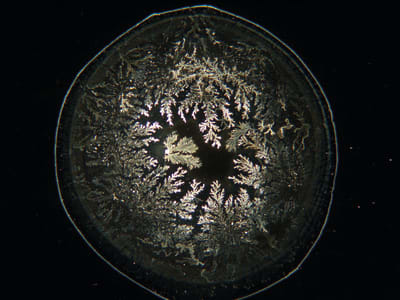
Particularly striking: the evaporation patterns of the MAUNAWAI water showed both concentric rings and crystal-like structures reminiscent of ice crystals. According to current scientific understanding, this high degree of order is the key to the water’s vitality and an indication of its biological quality.
Comparison with other waters
A direct comparison with differently treated waters was also revealing.
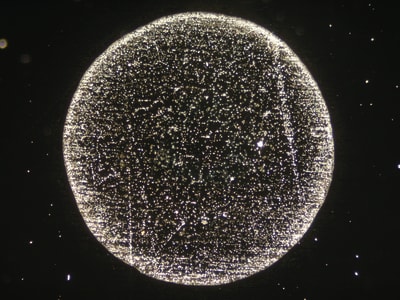
Reverse osmosis water and distilled water showed significantly different patterns in the evaporation images compared to the MAUNAWAI filtrate – less structured, less vibrant, less ordered. This is not surprising: reverse osmosis processes remove virtually all dissolved substances from the water, including the minerals that are important for structure formation. The MAUNAWAI filtrate, on the other hand, displayed a quality that came remarkably close to that of natural spring water. The natural balance between purification and mineral retention, which characterises the MAUNAWAI approach, was clearly discernible in the images.
For comparison, water from the historic Zim-Zim well near Mecca was also examined – a spring water to which special qualities have been attributed for centuries. The evaporation images of the MAUNAWAI water showed structural similarities to this natural reference water – impressive evidence of the MAUNAWAI system’s ability to replicate the natural quality of spring water.
Scientific background to the method
The evaporation imaging technique may seem unusual at first glance, but it is based on a solid scientific foundation. Imaging techniques are indispensable in science – from X-ray diagnostics through magnetic resonance imaging to positron emission tomography. In the study of water, such techniques have not yet gained widespread recognition within mainstream science, yet established scientists such as Prof. Dr Kröplin have demonstrated their validity in numerous studies.
The Japanese researcher Dr Masaru Emoto has also made many people aware, through his crystallisation images, that water possesses properties which cannot be explained by conventional scientific parameters. Emoto had developed the imaging technique after his strictly scientific magnetic resonance research on water failed to resonate with the wider public. This highlights the particular advantage of imaging techniques: they make complex scientific relationships immediately accessible and comprehensible.
Resilience to electromagnetic pollution
A supplementary study yielded a fascinating result: MAUNAWAI-filtered water exhibits a stable droplet structure even under the influence of mobile phone radiation. Whilst untreated tap water underwent a significant structural change when exposed to radiation from a DECT base station – the edge became broad and frayed – the MAUNAWAI water reacted in the opposite way: The initial structure was reinforced, and the droplet pattern became more distinct. This suggests that well-structured water possesses a natural resistance to electromagnetic interference.
A picture is worth a thousand measurements
Evaporation images do not replace chemical analysis – but they add an important dimension to it. They reveal the biological quality of the water, which cannot be captured using conventional measurement methods. The Chinese proverb “A picture is worth a thousand words” is particularly apt here: what numbers and threshold values cannot express becomes immediately visible in the evaporation images.
If you would like to learn more about the scientific principles of water structure, we recommend the ‘Our Technology’ section, particularly the ‘Inspired by Nature’ section.